

Megan Bagoyo McKellar
Lucy Peros | Photos courtesy the Bagoyo McKellar ‘Ohana
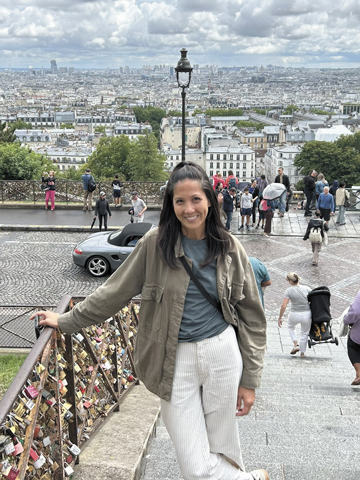
An unknown writer said, “Grandparents are a family’s greatest treasure, the founders of a loving legacy, the greatest storytellers, the keepers of traditions that linger on in cherished memory. Grandparents are the family’s strong foundation. Their very special love sets them apart. Through happiness and sorrow, through their special love and caring, grandparents keep a family close at heart.”
This month’s featured Sakada offspring, Megan Bagoyo McKellar thinks very highly of her late grandparents, Vicente (a Sakada) and Rosa Bagoyo of Kahului, Maui.
Megan was born on Maui, Hawai‘i, in 1983. She attended Wailuku Elementary and Lāna‘i High School and Elementary. After high school, she attended the University of San Diego and received her Bachelor’s degree in Political Science with a minor in English. She then continued to San Diego State University, receiving her Single Subject Teaching Credential in English.
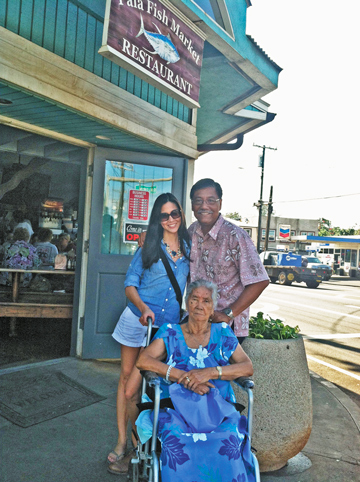
For the last seven years, Megan has served as an Assistant Principal. Currently, she is an Assistant Principal over Humanities in a Los Angeles high school, supporting the instructional programming and professional development in the English and History Departments. Prior to being an Assistant Principal, she was a teacher, first in San Diego, then in New York City, and finally in Los Angeles.
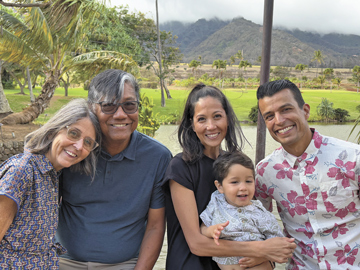
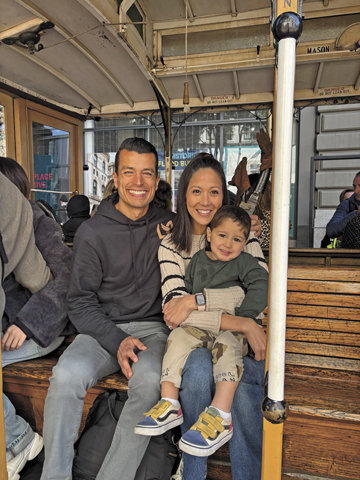
Megan is married to Joseph McKellar. He is currently the Executive Director of a statewide community organizing non-profit. They have one son, Francisco McKellar, who they call “Kiko.” He is three years old.
Megan has two sisters: Meredith, who is married to David Burns, and they have two children. Her other sister is Mallory, who is married to Lamar Kumangai, and they also have two children. Both Meredith and Mallory are nurses.
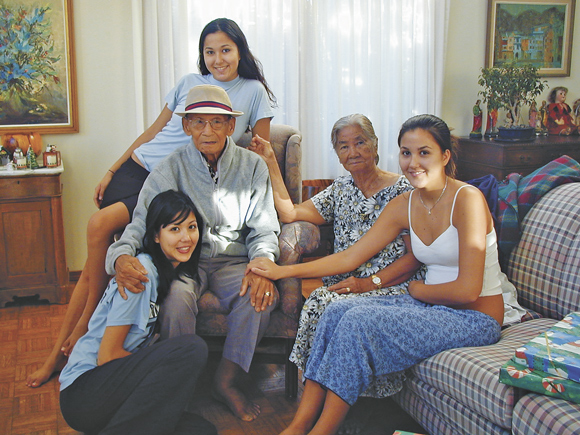
Megan and her family are very active in their church community. They attend daily mass and serve as liturgical ministers.
Recently, Megan received the award of Assistant Principal of the Year at her school, Alain Leroy Locke College Prep Academy.
Megan loves to travel and spend time with her family. Her favorite interest and greatest joy is being a mother to her son, Kiko. She said every day with him is a new adventure, filled with curiosity, laughter, and unexpected moments that turn the ordinary into something special. He teaches her so much about love and patience. His ability to find joy in the simplest things reminds her to slow down and truly be present. “Parenthood is the most meaningful and rewarding part of my life,” says Megan.
Megan’s grandfather, Vicente Bagoyo, Sr., was a Sakada who, at one time, politics was in his blood. He was born in Santa, Ilocos Sur, Philippines, on June 17, 1916.
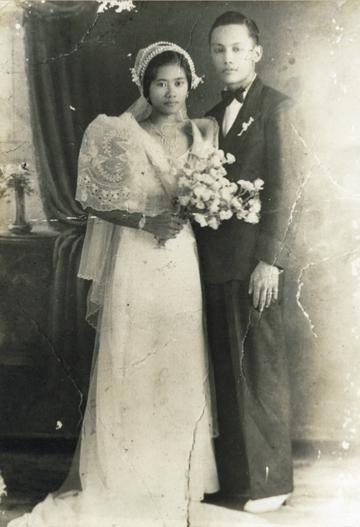
Because of the hard life in the Philippines, ambitious Vicente came to Hawai‘i on April 26, 1946, leaving behind his pregnant wife Rosa, and his two young daughters. He left Port Salomague on board S.S. Maunawili. He was able to come to Hawai‘i by luck and by creativity. It so happened that a man named Mariano Galinato changed his mind to come to Hawai‘i, so Vicente and his very supportive wife Rosa asked if they could buy or pay Mariano Galinato for his recruitment papers. Mr. Galinato happily agreed to sell his recruitment papers.
The Bagoyos paid twenty pesos for that recruitment paper. With the help of the former Governor of Santa, Ilocos Sur, Gov. Sixto Brilliantes, Vicente got through the migration lines, physical checkup, etc. with flying colors even though not as Vicente Bagoyo but as Mariano Galinato. He had to make sure when the name Mariano Galinato was called on the S.S. Maunawili, he remembered he was Mariano Galinato. It was difficult at first but he became used to that name.
Upon reaching Hawai‘i, they stopped at the Kahului Harbor on Maui to drop off some Sakadas, then continued to Hilo, Hawai‘i. In Hilo, they were able to choose which plantation they would like to go to and work. Vicente chose to go to Lāna‘i to work under Dole Company for fifty cents per hour. Young Vicente cut grass in the pineapple field, but it lasted for only five days. He just was not meant to be a field worker.
Vicente had a brother named Nazario Bagoyo, who lived in Honolulu and who owned a café called Spic and Span Café. Nazario welcomed his brother, Vicente to work for him as a kitchen helper for less than a year. There was a waterfront strike, and goods needed at the café were not being delivered. Unfortunately, Spic and Span had to close, so Vicente had to find another job. He found a job at the Navy yard and worked in the electronics department at Pearl Harbor for three years. Nazario, his brother, came to Maui to work at the Pioneer Mill in Lahaina.
In the meantime, Vicente missed his young family in the Philippines so much that he decided to go back to the Philippines for good in September 1949.
Being such a caring brother, Nazario Bagoyo asked Vicente if he wanted to come back to Hawai‘i so that he could file a petition for him. Vicente did not feel like coming back to Hawai‘i, but he told Nazario to file it anyway. It was all in God’s plan according to both Vicente and Rosa.
While in the Philippines, Vicente got involved in politics. He was so involved he ran for Council and won. He even had an ambition of running for Mayor or even perhaps for Governor of Ilocos Sur. Politics in the Philippines was so different from Hawai‘i’s politics. Aggressiveness is involved, especially if one wants you to belong to a particular party. If you resist, gun pointing, harassment, and even killing are inevitable. Religious Rosa claimed she prayed a lot during those trying times. Rosa was able to convince Vicente to give up politics. In fact, they even went to a big church in San Vicente to pray for their safety. Vicente said that after they left the church, he felt a sense of peace, and he was ready to tackle a new beginning. Philippine politics was behind him.
On July 27,1966, Vicente returned to Hawai‘i, thanks to the petition his brother filed for him. He worked at the Kā‘anapali Beach Hotel, Food and Beverage Department. He was also a Maintenance Supervisor for more than eleven years. He took early retirement in 1978.
Mr. Bagoyo was the founder of the Saranay Maui Organization, a mutual aid society that helped families after their loved ones passed away. He also belonged to the United Santanian Organization of Maui, Lāna‘i, and Molokai. Life was good in Kahului with the Bagoyos after retirement.
The following is Megan’s personal reflection on her grandparents, Vicente and Rosa Bagoyo. Reflecting on the impact Nanang and Tatang had on my life fills me with deep gratitude and pride. Their strength and resilience, which I learned through their storytelling and bearing witness to the way they spent their time, shaped the foundation of who I am and how I choose to move through the world. Their sacrifices and values influence how I engage in my community, with intention, compassion, and a deep sense of responsibility to care for my neighbor. Nanang (Grandma), was the heart of our family, a matriarch who took pride in caring for everyone around her. I will never forget when I took my husband to Maui to visit her. True to her nature, the first thing she did when we pulled up to her house in Kahului was feed him immediately.
As he ate the home-cooked meal of ground beef and marunggay (kalamunggay), she stood over him, monitoring every bite and watching closely for his reaction. The smile of satisfaction when he gave her an approving nod, continued to devour the dish was all she needed. Feeding others was Nanang’s way of nourishing both the body and the spirit. Tatang (Grandpa), in his quiet but powerful way, was a pillar of strength. He did not just dream of a better life for us, he crossed an entire ocean to make it possible. When I graduated from college, the joy of that milestone was amplified by knowing that I had fulfilled a piece of the dream he worked so hard to build. Their legacy lives on in me every day.

Lucy Peros is a retired schoolteacher, having taught at St. Anthony Grade School and Waihe‘e Elementary School. Her late parents, Elpidio Cachero Cabalo (a 1946 Sakada) and Alejandra Cabudoy Cabalo both worked for Maui Land and Pine Company. Lucy enjoys being with other retirees in the Enhance Fitness Program under the Department of Aging three times a week. Whenever she can, she joins other Waihe‘e School retirees when help is needed at the school. Lucy also devotes some of her time as Lector and choir member at both Christ The King Catholic Church in Kahului and St. Ann Catholic Church in Waihe‘e. She enjoys being with her granddaughters after school. She also enjoys writing, reading and gardening in her spare time.