


Dulce Karen Butay
In some parts of the world, September signals the arrival of autumn, back to school and the gradual winding down of the year. But in the Philippines, it marks something far more festive: the beginning of the Christmas season. As soon as the “ber” months begin, Filipinos usher in a joyful, months-long celebration reflecting the country’s deep faith, strong family ties and love for tradition.
By September 1st, malls begin playing Christmas carols, homes and streets start to sparkle with parol lanterns and lights. Filipino radio stations revisit the beloved song of José Mari Chan—the unofficial voice of Filipino Christmas. The song starts with these lyrics: Whenever I see boys and girls selling lanterns on the street, I remember the child in the Manger as he sleeps … . This early start is not just a quirky tradition; it’s a cultural expression of warmth, hope and resilience. In a country that has faced many hardships, natural disasters, economic challenges and more—Christmas offers a season-long reminder of joy, generosity and community.
More than just a countdown to December 25th, the Filipino Christmas season starting in September reflects the nation’s identity. It blends faith, festivity and family, making this month more than just a transition from summer to the end of the year. For Filipinos, September is the joyful drumroll to the most anticipated celebration of all—Christmas. Are you ready for it?
Shout out to all the September babies! We have the most birthdays in this month! Do you know why? Because it’s cold in December when they were conceived … . Happy birthday to Keilah and Deja, Mana (our fur baby), Velma Coloma, Arissa Kira, Ernesto Casabay, Mando Domion, Ferdinand Cajigal, Debbie Butay, Julia Impelido-Butay, Imelda Ulep, Gil Keith-Agaran, Didi Hamai, Michelle Santos, Ofelia Pascual and an extra extra shout out to my mom, Dolly Butay. Happy, Happy birthday to you! Maligayang bati sa inyong kaarawan! (Tagalog) Naimbag nga panagkasangay mo! (Ilokano) Makapagayaya nga aggaw na nikeyana mu! (Ibanag) Masayang kebaitan queca! (Kapampangan) Masadya gid nga adlaw sa imo pagkatawo! (Ilonggo)
Let’s see what’s going on with our story this month and where Michael and Angel will be going next, shall we?
For a long moment, no one spoke. The faint crackle of the call was the only sound, the silence heavy but not empty-full of everything they could not yet put into words.
Finally, Lena exhales shakily, her sobs softening. “Are you doing fine there, akon anak (my child)? When you come home,” she says, voice trembling but filled with hope, “we will make adobo… just the way you like it. And we will sit together at the table, all of us, together again.”
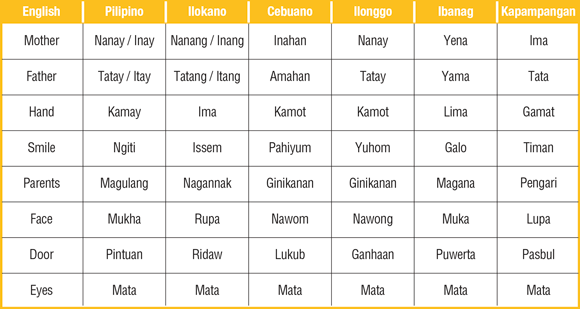
Angel closes her mata (eyes) briefly, imagining it—the smells, the laughter, the warmth of their kamay (hands). When she opens them again, her pahiyum (smile) is steady. “I’ll hold you to that, inahan (mother).”
“I am masaya (happy) to see that you are safe, ing anak ku (my child). We are always thinking of you,” Lena says with isem (smile).
Angel is about to say something when she hears a loud knock from puwerta (door).
Knock … knock … knock …
She pauses and looks towards the ganhaan (door). The knocks are deliberate and heavy. She rises carefully, each step making the floor creak louder than usual. Another round of knocks echo through the room—this time sharper, insistent.
“Angel,” Michael’s voice from the other side, low and strained. “Are you awake?”
She hesitates at the pintuan (door) but she opens it anyway. “Michael?” she whispers back, barely loud enough to be heard.
“You are awake,” he says. He steps closer, “I could not sleep. I had to make sure you were safe. His mata (eyes) lingers on hers, his lips curve faintly, the shadow of a timan (smile) tugging at the corners.
Finally, she steps aside. “Come in before you wake up your magulang (parents).”
He enters quietly and closes the pasbul (door) behind him.
Michael’s gaze flicks to the glowing screen, the small square of her mother’s face still visible. The sound is muted but the faint outline of Angel’s family remains, waiting patiently on the other side of the call.
“You were talking to your magana (parents)?” he says softly, “I didn’t mean to interrupt.”
Angel shakes her head quickly, “No—it’s fine. I finally connected to my ginikanan (parents),” she says, finally daring to meet his gaze.
The silence between them stretches, delicate as glass. Angel feels her chest tighten beneath the weight of Michael’s gaze, her breath caught somewhere between a sigh and confession.
But before she could speak, a voice breaks the moment.
“Is that you Robby? Robert?” The voice comes from the phone. Angel’s mother, still on the muted call, leans closer to her camera, squinting as though trying to peer through the screen.
Michael bears a striking resemblance to his Uncle Robert. If Lena mistakes him for Robert, does that mean they truly share a past? And if so, could it also mean Angel is actually his cousin?
Anyways, that’s all I have. Keep an eye out for my column in every issue. I’m Dulce, helping you to master your Filipino Languages. Like always, let’s laugh, let’s makinig (listen) and Let’s Talk Pinoy! Hanggang sa muli! (Until next time!) Ingat! (Take care!)

Dulce Karen Butay graduated from Maui High School and received her Associate in Arts degree in Liberal Arts from Maui Community College. She earned her Bachelor of Science in Business Administration, specializing in Accounting, from the University of Hawai‘i – West O‘ahu. She is currently the Administrative Officer at the County of Maui, Department of Finance. Butay is the owner of Maui Balsamic Vinegar and is a licensed Resident Producer of Life Insurance with World Financial Group and an Independent Consultant of Saladmaster. She is a part of Saladmaster’s Travel Club and won an all-expenses paid trip to Cancún, Mexico. Butay has traveled to Texas, the Philippines and Thailand as one of the delegates from Island Healthy Solutions, a Saladmaster dealer on Maui.