

Small Kid Time
Gilbert S.C. Keith-Agaran Photos courtesy Gil S.C. Keith-Agaran
Locally when talking story with old friends, we often wax nostalgic and with affection about “small kid time.” As I grow older, the easy temptation to misremember the bad with the good is the persistent challenge. I’m missing my high school class reunion. They going ‘Vegas around Thanksgiving (same weekend UH plays UNLV and the Raiders host Dillon Gabriel—if he’s still Browns QB1—at home). I can’t get away.
I look forward to those moments—scheduled or by happenstance. It’s simply comforting to recall how Maui was small kid time.
Old Kahului Shopping Center (an innovative place—when it first opened in the 1950s, one of the first U.S. spots built specifically to house a mixture of shops and food spots outside a residential neighborhood or a town square). It had Craft and Toda Drugs (including comic book and magazine racks). Noda Supermarket. Peggy’s and Johnny’s. Ah Fooks Market. Tasaka Guri Guri (before the azuki beans were banished). Port Town Delicatessen. Barber shops. Shirley’s and a Dairy Queen across Lono Avenue.
Plenty places outside Central Maui.
Driving with friends to various swimming holes then stopping at various Ha‘ikū and Upcountry mom and pop stores. Who had the best hotdogs and cone sushi? The bakeries were usually sold out by the time we were out-of-school and pau with clubs and sports and general gallivanting.
Growing up on Luna Lane, the town off Baldwin Avenue and Hāna Highway was where we hung out. I would get sent to buy rope tobacco and twine and other things for my grandfather at the Pā‘ia Mercantile. Hours reading comic books at Machida’s and Nagata’s until the cashier gave you stink eye to remind you it wasn’t a library. Getting haircuts at Garcia’s. Going dentist at Dr. Ikeda next to Ikeda Store.
Everyone got jobs for spending money. Working at Dairy Queen because I was born too late in the year to join classmates and friends making good summer money at the Cannery. Even some of our high school teachers were summer supervisors at the Cannery.
We kinda operated on plantation time. Irrigators like my dad going bed right after dinner so they could get up early for catch ride on the red HC&S trucks that came by the Kahului house to ferry them to their assigned cane fields.
It was a carefree, maybe careless time. Driving with your lights out from Wailuku to Kepaniwai Park and ‘Īao Needle. Going beach every weekend. Camping on empty beaches at Wailea and Mākena. Playing on old pillboxes on the Pā‘ia and South Maui shoreline. Fishing in Pā‘ia with just bamboo poles, some string and a hook with bait from Bersamin’s fish market. Catching prawns in various streams. Collecting tilapia from HC&S reservoirs. Swimming at the Salvation Army Pool. Wading in ‘Īao Stream.
Maui County Fair at the dusty old fairgrounds. Parties at the old plantation club houses in Pu‘unēnē and Pā‘ia before all the County built community centers.
Hanging out at Kahului Library because it was cooler inside on a weekend.
My roots are firmly on Maui. I colleged on the east coast and law schooled in the Bay Area (Go Giants! Boo 49ers/ Who Dey!). I worked in the big city of Honolulu. I love living here. It’s why I made a conscious decision many years ago that this is where I wanted to stay.
Growing up, working and living here, I know our grandparents and our parents who worked on the plantations improved the quality of life and choices for my generation. It took hard work, education, opportunity and, yes, a somewhat unconsciously selfless sense of community.
Obviously, I, more often than not, intentionally dwell on the better memories. Not that interested in acknowledging whether my grandfather and my father came here from the Philippines as Settlor Colonist pawns or toiled in the hot sun really as little more than enslaved farm labor. I like the notion they were heroic in traveling to a place far away from Inang Bayan with the plan to make a better life for their progeny.
It took courage. My grandfather and my dad came to Hawai‘i before airplanes made the journey a matter of hours rather than months on an open ocean (my mom came later on the S.S. Wilson—still many weeks on the open ocean while sharing a room with three other women). They came without first seeing the sand and surf on television or the internet. They came knowing only the people who disembarked on the ships with them. But at some point, they made—perhaps as much accidentally as purposefully—Maui home.
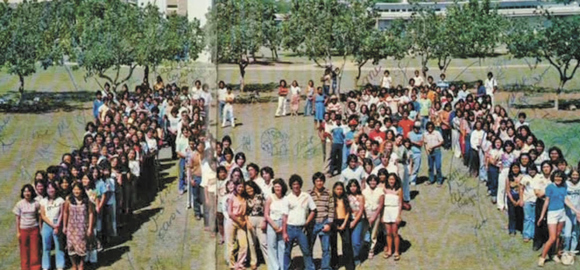
Whether we were born on Maui or moved here or moved back after seeing America, we all have more economic choices today. Small kid time we had open ended possibilities for the future. Maybe not the paradise and mythical good life we would wish but still better than hours in the pineapple and cane fields or the cannery (a couple of my classmates did spend their careers with HC&S, many until the final harvest). I have classmates who got engineering degrees who were not that interested in playing with water. So instead of taking a local job with public works or Pearl Harbor naval shipyard or one of the private civil firms helping developers, they moved to California, Washington or elsewhere to pursue aeronautical and military industrial complex supporting positions.
My class, as far as I know, had only one person earn a medical degree. We have a number of nurses and medical technicians (and not all of them with roots from the Motherland) and others in health-related and adjacent fields. We have tradesmen and contractors and a prominent local developer. We have some artists and musicians and entertainers. Quite a number went into the various armed services, some for the minimum but others for many years, before coming back for civilian jobs using the skills (or not) they learned.
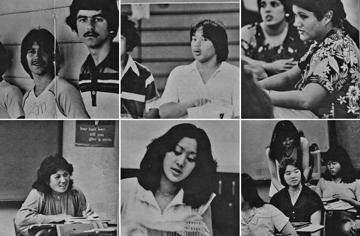
We have classmates in the civil service throughout the various departments and agencies. I’m most surprised by how many teachers, counselors, professors and educators came out of Maui High School (and so many have already “retired” after decades of service).
I admire my fellow Sabers a lot. I appreciate them for contributing to Maui’s community or whatever place they’ve made their home, in so many different ways. They’ve worked and built and created. They’ve formed families and raised children. Each year we lose a few more and I remember many of them from small kid time with both sadness and reflective fondness.
I kinda wish I could join the reunion but I know we have reunions whenever we see each other in the street.
Never would have predicted the lives we’ve lived from small kid time.
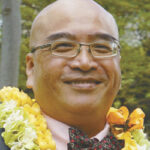
Gilbert S.C. Keith-Agaran attended Maui High School in one of the first classes to spend all four years at the Lono Avenue campus. He practices law in Wailuku and formerly worked in state and county government and served in the state legislature.