

Dee Cabalo Dilwith
Lucy Peros | Photos courtesy Dilwith ‘Ohana
The grandfather of this month’s Sakada Offspring was pro-education. His famous phrase when he was living was “It is easier to push a pen or pencil than pushing a plow.” He shared this with his children and in turn his children shared it with their children and grandchildren.
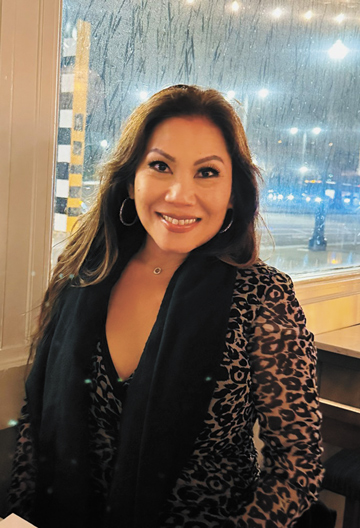
This month’s featured Sakada Offspring is Dee Cabalo Dilwith. She was born in June 1968 in Honolulu, Hawai‘i. She attended Kalihi Waena (K–2), St. Anthony School (3–8), and St. Francis High School (9–12). After high school, Dee attended Leeward Community College for two years. She earned all her college foundation courses there with a goal of being admitted into the nursing program at the University of Hawai‘i, Mānoa campus. She took the board of nursing program and passed it with flying colors. She received her Registered Nursing degree in four years. After graduating from the University of Hawai‘i, she worked at Kuakini Hospital starting in 1991 for 2 1⁄/2 years. She then transferred to Queens Hospital where she is still working.
Dee received two plaques for working at Queens Hospital: one for 25 years seniority and one for 30 years seniority plus cash that came along with it.
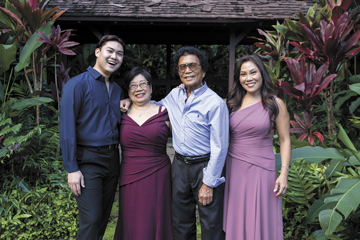
Besides being busy working as a nurse, Dee still finds the time to serve the church at Our Lady of Sorrows Catholic Church in Wahiawā as a Lector at their masses. As a nurse, she is also very involved with the Hawai‘i Nurses Association in Honolulu. In her spare time, she likes to work out, go hiking and visit and talk stories with her parents, Ben and Connie Cabalo. Dee is their only child.
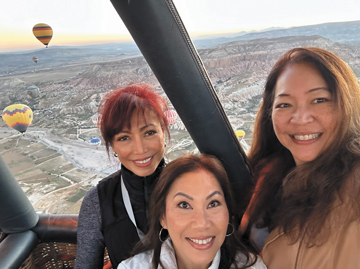
She enjoys traveling, especially with her son, Trey or with her friends. She traveled to Asia and Europe. Her favorite place she has visited was a region in Turkey called Cappadocia. According to Dee, this was an amazing place because they stayed in a cave hotel and rode in a hot air balloon.
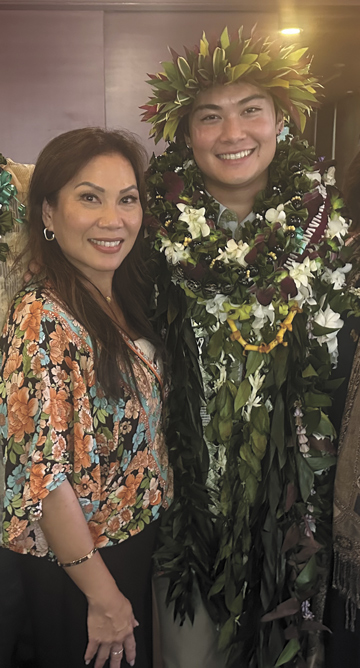
Dee has one son, Trey Dilwith who just graduated from the University of Hawai‘i with a degree in Music Education. Trey is very talented. He was chosen by the University of Hawai‘i Music Department to lead the graduating class of 2025 to sing the University’s Alma Mater, the Star-Spangled Banner and Hawai‘i Pono‘ī. Trey is planning to join the workforce as a teacher in the fall. He hopes to teach either at Leilehua High School or Kapolei High School.
Dee’s grandfather, Elpidio Cabalo was one of the thousands of sakadas who came to Hawai‘i in 1946 recruited to work in the pineapple and sugar-cane plantations. His younger brother, Macario Cabalo came along with him. At age 24, as a young father of two little boys, Ben (Dee’s father, 4 years old) and Dominick (1 year old) came to Hawai‘i aboard the S.S. Maunawili. He was determined to come to Hawai‘i, to work to find a better life for himself and his family even if it meant leaving his young family behind. He was born in Cagayungan, Narvacan, Ilocos Sur, Philippines on December 6, 1922. He was a very industrious farmer and good fisherman. He was married to Alejandra Cabalo. Alejandra’s father, Bonifacio Cabudoy was also a sakada who came to Hawai‘i in 1923.
Elpidio worked for Maui Land and Pine on Maui while Macario went to work on Kaua‘i. The back-breaking job at the pineapple field was easy for Elpidio because he was used to working as a farmer in the Philippines. At Maui Land and Pine, he did different jobs such as planting pineapples, harvesting the fruits, weeding the fields and he even drove the trucks to deliver the fruits to the pineapple cannery.
When he first arrived on Maui, Elpidio and many sakadas lived at Haleakalā Camp also called “Corn Mill Camp,” which is now the Pu‘ukoa subdivision where many beautiful homes now stand. All the men who lived in the camp were single men. They celebrated Rizal Day, played sports, played music and even had sports like chicken fights (biagan) to keep them entertained. In those days, chicken fights were allowed. In the beginning, Maui Land and Pine was only offering some of the men work for three days a week. So these men, like Elpidio went to work at the private pineapple growers in Ha‘ikū for extra money.
In the fields at lunch time, they ate together, potluck style. They formed into a circle, placed their kau kau tins, a two-tier tin container with a handle; the bottom part for the rice and the top part for the main dish in the center and shared their food with each other like a picnic.
In the 1960s Elpidio relocated to Korean Camp, closer to the Maui Land and Pine main offices before Hāli‘imaile. This camp was also for single men only. In 1962, however, Elpidio’s wife, Alejandra, son Dominick and daughter Lucy followed Elpidio to Hawai‘i. His son Ben (Dee’s father) arrived one year before them. So Elpidio had to relocate again, this time to Hāli‘imaile Village where sakadas who have families lived. Alejandra also worked in the pineapple fields until she retired at age 62. Elpidio also retired from there at age 62. Both Elpidio and Alejandra lived a simple long happy life. They could have celebrated their 70th wedding anniversary if Elpidio had lived for two more months. He passed away at age 89 and Alejandra passed away at age 101.
Today, in the year 2026, the man who said “It’s easier to push a pen or pencil than pushing a plow” got his dream come true. All his three children, five grandchildren and two great grandchildren (one just graduated and one graduating in June) received their college diplomas in their chosen fields. With faith, devotion and hard work, dreams can come true.
The following is Dee’s reflection on her grandfather, Elpidio Cabalo.
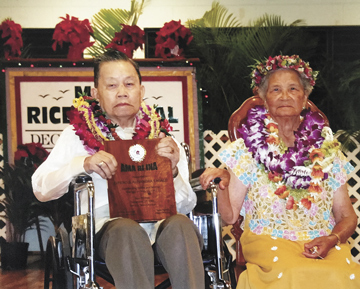
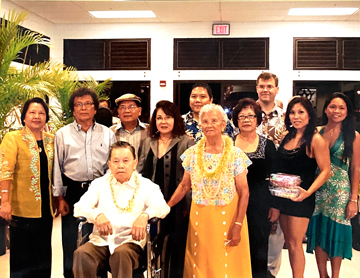
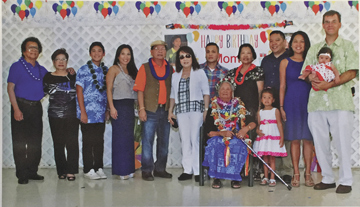
Although I did not spend too much time with grandpa Elpidio, I still have fond memories of him. One of my favorite memories was attending an event that honored him as being a sakada. We also went to Maui to attend a huge celebration to honor both Grandpa Elpidio and Grandma Alejandra as ‘Ama at Ina’ (Mother and Father of the Year) at the Rice Festival held at the Binhi at Ani Filipino Community Center in 2009. These were very proud moments I’ll always remember of my grandpa.
My late grandpa was a loving and caring man. He used to emphasize to us his grandchildren the value of education. He used to tell us to study hard and be somebody someday so our parents don’t have to worry about us. Our family values on the importance of education is the main reason why I went into nursing school to become a registered nurse. Like my grandpa, I’ve also instilled that in my son Trey who recently graduated from the University of Hawai‘i Mānoa Campus with a Bachelor of Education degree in Music. He will be pursuing a Master’s degree after being in the workforce for two years. I sincerely know my grandpa is happily looking over us.

Lucy Peros is a retired schoolteacher, having taught at St. Anthony Grade School and Waihe‘e Elementary School. Her late parents, Elpidio Cachero Cabalo (a 1946 Sakada) and Alejandra Cabudoy Cabalo both worked for Maui Land and Pine Company. Lucy enjoys being with other retirees in the Enhance Fitness Program under the Department of Aging three times a week. Whenever she can, she joins other Waihe‘e School retirees when help is needed at the school. Lucy also devotes some of her time as Lector and choir member at both Christ The King Catholic Church in Kahului and St. Ann Catholic Church in Waihe‘e. She enjoys being with her granddaughters after school. She also enjoys writing, reading and gardening in her spare time.