

Does the Pacific Ocean protect Hawai‘i from recent ICE operations?
Gilbert S.C. Keith-Agaran
Hawai‘i is one of the most remote places in the world. The early explorers from Marquesa and Society islands navigating by the sun, stars, winds and currents were probably lucky to originally find these islands (which Mark Twain poetically called “the loveliest fleet of islands anchored in any ocean”). Certainly Captain James Cook didn’t expect to find them (unless he had access to some Spanish maps that may suggest the location of some isles in the general vicinity of our homes).

The moat that is the Pacific Ocean can lead us to complacency, that we’re somehow safe and insulated from what’s happening on the mainland and the rest of the world (putting aside the Pearl Harbor attack in 1941).
But modern technology and globalization have narrowed whatever isolation under which we can shelter. Certainly anyone with access to cable television or a computer feed can’t escape the 24-hour news cycle. What happens in Kyiv, Davos, Gaza, Manila or Tokyo is instantly available.

But the Pacific expanse makes it easy for us to look away.
At some point we can’t ignore what’s happening. In the Judeo-Christian tradition, God advises, When an alien resides with you in your land, you shall not oppress the alien. The alien who resides with you shall be to you as the citizen among you; you shall love the alien as yourself, for you were aliens in the land of Egypt: I am the Lord your God. (Leviticus 19:33-34 NRSV). I realize some today undoubtedly rationalize that the passages on strangers in a strange land apply only to “legal” strangers—but there’s no distinction between different types of immigrants in scripture.
So don’t look away. Hawai‘i residents can’t be unaware of the murder by ICE of Renee Nicole Good in Minnesota—the videos have been analyzed ad nauseum. Or that her killer called her a “fucking bitch” or that other ICE agents sneer “that’s why that lesbian bitch is dead” to other Minnesota protestors.

Maybe it shouldn’t be surprising that the same federal agency manhandled 79-year-olds protesting that murder or tackled a guy dressed in a giraffe costume or ignore whether a person of color is an American citizen (they’ve even detained off-duty police offers and disabled veterans). And then lie about what happened. And, no matter how the administration describes it, ICE has also arrested a 5-year-old child and tear-gassed a family of six driving home from a middle school basketball game (with a baby hospitalized).
A whistleblower recently disclosed ICE has been advised they can kick down doors without judicially reviewed warrants or that even “mistaken” arrests of American citizens counts against the daily quota (so ICE has an incentive to round up everyone).

But we know Maui isn’t so isolated.
ICE has already invaded a home in Kahului in the early morning hours and forced public school teachers out on the street in their sleeping clothes. In that incident, ICE did not identify themselves or provide any warrant (all this time I’d assumed the search was judicially reviewed and issued). They did not allow an American citizen to go back in the house to get her identification. It didn’t matter they had rounded up teachers recruited here by Hawai‘i’s Department of Education and living and working here under approved federal J-1 exchange VISAs from the Philippines. ICE refused requests the teachers be allowed to call their schools to warn them they would be late for work.
It turned out the person ICE was looking for no longer lived in that house.
So ICE left. No apology. Don’t look away—this happened on Maui.
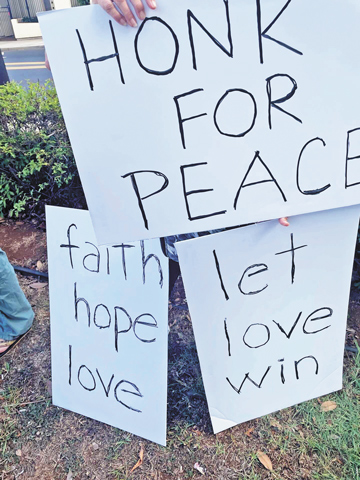
Part of what makes America great was adoption of a Bill of Rights as a condition of the different States ratifying the U.S. Constitution. A bedrock right is embedded in the 4th Amendment. That part of the U.S. Constitution protects individuals from unreasonable government searches and seizures, ensuring privacy and security in their persons and homes, requiring warrants to be based on probable cause, supported by oath and specifically describing what is to be searched or seized, thereby guarding against arbitrary intrusion by law enforcement.
Apparently the 4th Amendment now has an ICE exception.
I didn’t vote for that.
And I assume you didn’t either.
Gilbert S.C. Keith-Agaran, born and raised on Maui after Hawai‘i became a State of the Union, served in the State legislature representing Central Maui from 2009 to 2023. He previously worked in the administrations of Hawai‘i Governor Benjamin Cayetano and Maui Mayor Alan Arakawa. He practices law in Wailuku.